Courting the demand before defining how to connect it
Seven days apart, Chile's government convened the global data center industry and published a plan that projects that demand and reinforces the need to expand transmission. Both facts are public and official. What has not yet been defined is a framework specific to this kind of load.
On July 31, 2026, Chile’s Ministries of Energy and Science convened the first public-private meeting of the Chile Energy Data Hub, bringing together more than 60 executives and representatives from power generators, global technology developers, and public agencies around electricity supply for data centers.
A week earlier, on July 24, the Ministry of Energy published the preliminary report of the Long-Term Energy Plan (PELP) 2028-2032, open for public comment until August 24, 2026. The document adds “Data Centers” as a demand subsector in its own right for the first time: it estimates 198 MW installed nationwide in 2024, on a trajectory reaching about 594 MW by 2030, and in one of its scenarios adds, for the Antofagasta Region, “an installed capacity of 500 MW by 2030, rising to 1 GW by 2057.”
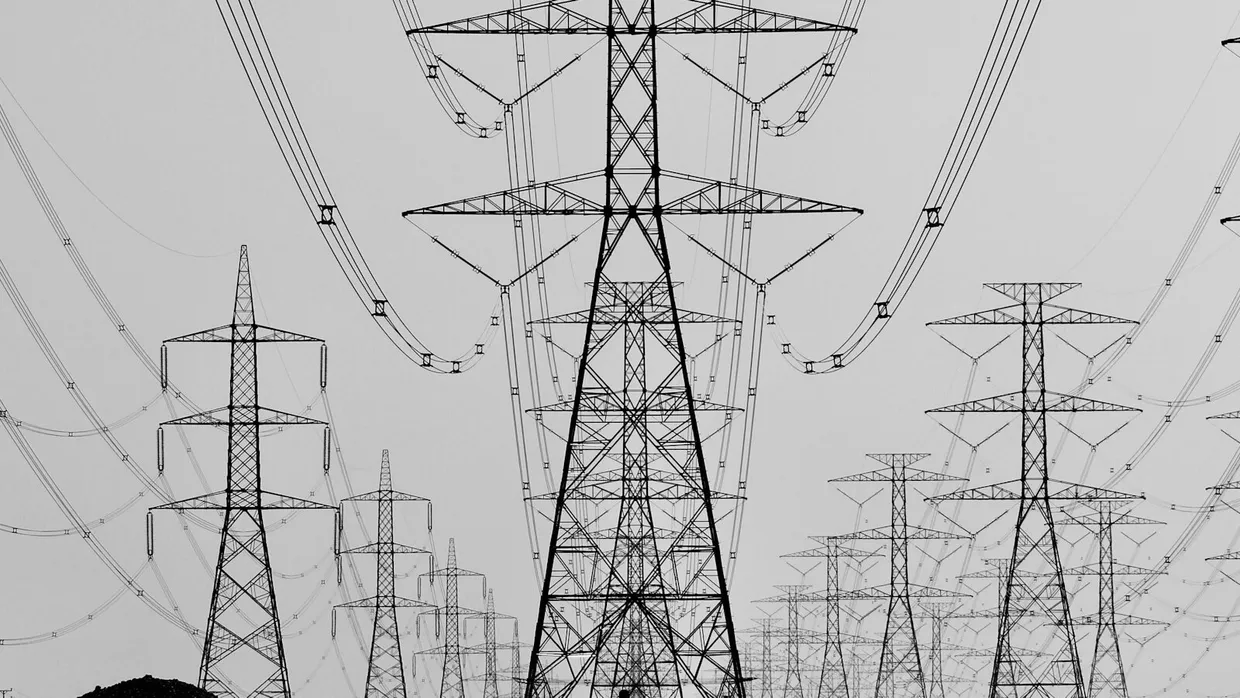
On the grid, the same report “reinforces the need to expand transmission along the Charrúa-Ancoa-Alto Jahuel-Lo Aguirre corridor at 500 kV by at least 1,750 MVA” — to carry wind power toward central and northern Chile — and identifies 220 kV expansions “with lines requiring expansion of up to six times their size, across all scenarios” — concentrated in the Antofagasta and Maule regions.
Both are public, official actions, seven days apart.
Two different speeds
Attracting demand and building the infrastructure to serve it run on different clocks. An international roadshow generates interest in a matter of months. A bulk transmission expansion is measured in years, and its execution depends on planning, tendering, and construction processes that are already defined and underway.
That asymmetry isn’t unique to Chile, nor does it indicate a lack of coordination: it’s the nature of both processes. What distinguishes each jurisdiction is what it does with that gap while it exists.
The alternative is already on the books
In August 2026, the Australian Energy Market Commission (AEMC), which writes the rules for Australia’s electricity market, published the advice it had delivered to energy ministers, setting out a four-point framework for large loads. It is not yet binding: implementation rests with governments. Its elements:
- Backing their consumption with newly built renewable generation, not existing capacity.
- Contracting for firming capacity.
- Registering as market participants, with the obligations that status carries.
- Providing demand-side flexibility to the system.
The Australian Energy Market Operator (AEMO), which runs the system, projects this demand will reach almost 10% of total electricity demand in the National Electricity Market (NEM) — Australia’s main grid — by 2050. The AEMC’s recommendation, faced with that projection, is to treat the load as a participant with obligations ahead of its mass arrival.
The difference between the two approaches isn’t about a country’s appeal or the quality of its resources. It’s about when the rules get set: before the demand materializes, or after.
What remains undefined
In Chile, a data center connecting today does so under the general rules applicable to any customer of its size. There is no regime recognizing its particular characteristics — intensive consumption, high load factor, acute sensitivity to interruption, and in some cases the ability to shift load across time — or translating those characteristics into obligations or differentiated connection terms.
That gap cuts both ways. For the system, it means fast-growing demand is absorbed without specific instruments to manage its impact. For the investor, it means the conditions under which a project was assessed may change once the framework is defined.
The PELP comment period closes on August 24, 2026. That is where this discussion formally takes place, and where the demand projections validated now will order the next decade’s expansion decisions.